Just blog to show off some video taken while in Rwanda. The video isn't always the best quality, but
Enjoy!
This first video is from the back of a mototaxi riding into downtown.
The second part of the adventure we climb the last part of the hill and arrive in the city center.
Next up is a sunset drive through Kacyrui village in Kigali. The American Embassy can see to the right at the top of the video. The audio is a bit loud, so turn down your audio before watching.
The final video is a bit bumpy but it give you a look at village life in Northern Rwanda.
Sunday, April 10, 2011

Friday, March 4, 2011
Rwandan Cooking
Long time no blog! I have started a few, but I've failed at completing them. I hope to back to them soon, but for now here is a quick photo tour of cooking in Rwanda.
The title of this blog my be a bit misleading. This is not a blog about Rwandan food (which deserves its own blog), but rather a blog about the food I cook in Rwanda. I have never been more challenged in my cooking than I have been here in Rwanda. The main challenges come in two forms; the first is in the limited variety of food available and the second is in the cost.
I'm fortunate to have come from a family that really enjoys food. Both my Mother and Father are great cooks and they both have totally different styles. My Father is an Asian loving soup maker and my Mother is a bit more traditional. I began baking at an early age and by the age of 8 I was baking chocolate chip cookies on my own.
Living aboard has taught me to be flexible and creative. Some people pack a first aid kit, I pack a spice kit. I never know what herbs and spices I will find and not find so it's better to be safe than sorry. My basic kit contains, Mexican chili, cumin, basil, oregano, onion powder, garlic powder, curry, dill, thyme and lots of stock. If it is a longer trip I will pack just about whatever I have and use up the last ounce in my suitcase. I used to pack hair products, but really isn't what ponytails are for?
The basic fresh ingredients in Rwanda include potatoes, green bananas, green beans, carrots, onions, garlic, eggplant, green peas, zucchini, green peppers, and cabbage. As for fruit you're looking at passion fruit, bananas (both the big and small variety), mango and pineapple. When it comes to meat you can easily find goat and beef. Pork is a bit harder to find and you don't want to eat the chicken here. The fish is mostly fishy tilapia from local fish farms. As for dairy, it easy to come across milk, yogurt, Rwandan Gouda and buttermilk. Not bad you say? Well really that's it anything not on this list is exotic and can be difficult to find. We get very excited about broccoli.
 Our first meals came in the form of lots and lots of soups. One of our more infamous soups was the result of ordering 3 whole chickens instead of the pieces of chicken at our local pub. It was also the last time we have ordered chicken.
Swedish ice cream buckets make great spice kits.
 The purchase of our grill has greatly advanced the food items we are able to cook. Our favorites include grilled veggies and pizza. The tricky part of making the pizza is to get the cheese nice and melty. Our grill was purchased at the local metal works shop. They turn old barrels into grills, fish fryers, coal shovels and dinning room tables.
Some of the most exciting discoveries I've made include how to make sour cream, how easy it is to make pickles (using cumbers from our garden), yogurt makes a great substitute for many things, flat bread is fantastic and easy to make, green beans can go in anything!
 Joss precooks one side of the pizza.
Note the grilled eggplant a pizza topping staple.
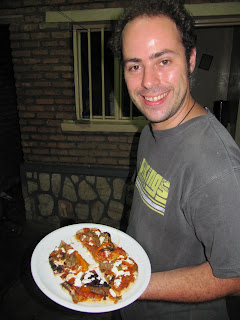 The finished product here is a beef fajita pizza. With some feta brought in from Ireland.
 Our flavors have greatly improved since the planting of a few herbs and spices. The fresh lettuce has been a great addition to our meals. This is the start of our city garden. We have grown corn, tomatoes, herbs, cucumber, zucchini, bell pepper and lettuce. It will be sad to say goodbye, but we hope the next tenants will be appreciative.
The title of this blog my be a bit misleading. This is not a blog about Rwandan food (which deserves its own blog), but rather a blog about the food I cook in Rwanda. I have never been more challenged in my cooking than I have been here in Rwanda. The main challenges come in two forms; the first is in the limited variety of food available and the second is in the cost.
I'm fortunate to have come from a family that really enjoys food. Both my Mother and Father are great cooks and they both have totally different styles. My Father is an Asian loving soup maker and my Mother is a bit more traditional. I began baking at an early age and by the age of 8 I was baking chocolate chip cookies on my own.
Living aboard has taught me to be flexible and creative. Some people pack a first aid kit, I pack a spice kit. I never know what herbs and spices I will find and not find so it's better to be safe than sorry. My basic kit contains, Mexican chili, cumin, basil, oregano, onion powder, garlic powder, curry, dill, thyme and lots of stock. If it is a longer trip I will pack just about whatever I have and use up the last ounce in my suitcase. I used to pack hair products, but really isn't what ponytails are for?
The basic fresh ingredients in Rwanda include potatoes, green bananas, green beans, carrots, onions, garlic, eggplant, green peas, zucchini, green peppers, and cabbage. As for fruit you're looking at passion fruit, bananas (both the big and small variety), mango and pineapple. When it comes to meat you can easily find goat and beef. Pork is a bit harder to find and you don't want to eat the chicken here. The fish is mostly fishy tilapia from local fish farms. As for dairy, it easy to come across milk, yogurt, Rwandan Gouda and buttermilk. Not bad you say? Well really that's it anything not on this list is exotic and can be difficult to find. We get very excited about broccoli.
 Our first meals came in the form of lots and lots of soups. One of our more infamous soups was the result of ordering 3 whole chickens instead of the pieces of chicken at our local pub. It was also the last time we have ordered chicken.
 Swedish ice cream buckets make great spice kits.
 The purchase of our grill has greatly advanced the food items we are able to cook. Our favorites include grilled veggies and pizza. The tricky part of making the pizza is to get the cheese nice and melty. Our grill was purchased at the local metal works shop. They turn old barrels into grills, fish fryers, coal shovels and dinning room tables.
 Some of the most exciting discoveries I've made include how to make sour cream, how easy it is to make pickles (using cumbers from our garden), yogurt makes a great substitute for many things, flat bread is fantastic and easy to make, green beans can go in anything!
 Joss precooks one side of the pizza.
 Note the grilled eggplant a pizza topping staple.
 The finished product here is a beef fajita pizza. With some feta brought in from Ireland.
  Our flavors have greatly improved since the planting of a few herbs and spices. The fresh lettuce has been a great addition to our meals. This is the start of our city garden. We have grown corn, tomatoes, herbs, cucumber, zucchini, bell pepper and lettuce. It will be sad to say goodbye, but we hope the next tenants will be appreciative.
Sunday, February 6, 2011
Road trip Nyungwe
Road trips are few and far between when you don't have a car, bike or even a bicycle. Over the New Year break a friend of ours loaned us his bike. It was the first time since our bicycles in Lund that we have had independent travel at the ready. For the most part I don't miss having a car or a motorbike in my life. It's freeing to get around the world by your own momentum and by public transport. Of course I hop on a moto taxi from time to time, but more often than not it's a taxi bus or walking. That said when the opportunity came around for us to bike-sit we jumped on it and then we headed out of town.
 Our hot ride for the week.
The final destination of choice was Nyungwe park, about a 5 - 6 hour ride south then west of Kigali. We chose to stop off halfway in Butare. Butare is a lovely city in the heart of Rwanda. Both the National Museum and University are located here. I had been to Butare several times for work. I don't have many photos of Butare, but I can tell you it has the best coffee shop/ shop in all of Rwanda. It also just happens to be owned by the same Lebanese that own the shop near our home in Kigali.

This is a photo of our hotel for the night. Really a lovely way to start the day, too bad the "eggs" were bight yellow and as leathery as a duck's backside. Coffeed up it time to hit the road for day two.
From Butare it was a 4 hour drive into the mountains. Windy roads too us from village to village. We stopped every now and again for a butt rest and a delicious warm coke. Our conversations with the locals was limited to the few words of Kinyarwanda we have picked up over the past 6 months. Usually, someone would come out of the eucalyptus speaking fantastic English and delighted to try it on us. It is really humbling to meet someone who comes from such a remote area and has taken it upon themselves to learn you language.

Upon reaching the edge of the rain forest a tea plantation acts as a buffer between the old Rwanda and the new. It is hard to believe that not so long ago Rwanda was not rolling hills of eucalyptus, pine and banana trees. This development is reality new to Rwanda and the result of Western influence and colonialism. The pros and cons of which are a whole other topic.
As we drove into the park the pine, tea and eucalyptus was replaced with dence vegetation of a closed canopy rain forest. Bird and monkey sightings grew more and more frequent. We drove for about an hour and reached the center of the park. The road that runs through the park is still the main road to Cyangugu, which is on the southern tip of Lake Kivu boarding the Congo. This means all traveling between Kigali and Cyangugu travel this road. Once in the park, the police no longer have jurisdiction, which means the speeds increase as do the number of cars and trucks on their sides.

The park does not receive a large number of tourists. Which is great as a visitor, but makes it difficult for the park to sustain itself. There were over a dozen rental houses and we were the only guests.

The next morning we were up early and ready for a hike in the forest. We had hoped to track the chimpanzees, but unfortunately they were too far away. We settled on a 10km hike to a look out point. Nyungwe is one of the largest mountain forests in Africa. The flora and fauna are particularly unique and important, as due to it's location and altitude within the Albertine Rift it was largely unaffected by the last ice age. The park is host to almost 300 birds, 200 types of trees, countless flowers and an exciting 13 species of primate. (http://www.rwandatourism.com/parks.htm)

The hike took about 4 hours. We were fortunate that the hike passed throughout a variety if terrain, which allowed us to enjoy a wide variety plants. The final vista gave us a 360 view of the park. To the south was Burundi, the west was the DRC and to the north the Volcanoes of Rwanda.

 Our hot ride for the week.
 The final destination of choice was Nyungwe park, about a 5 - 6 hour ride south then west of Kigali. We chose to stop off halfway in Butare. Butare is a lovely city in the heart of Rwanda. Both the National Museum and University are located here. I had been to Butare several times for work. I don't have many photos of Butare, but I can tell you it has the best coffee shop/ shop in all of Rwanda. It also just happens to be owned by the same Lebanese that own the shop near our home in Kigali.

This is a photo of our hotel for the night. Really a lovely way to start the day, too bad the "eggs" were bight yellow and as leathery as a duck's backside. Coffeed up it time to hit the road for day two.
From Butare it was a 4 hour drive into the mountains. Windy roads too us from village to village. We stopped every now and again for a butt rest and a delicious warm coke. Our conversations with the locals was limited to the few words of Kinyarwanda we have picked up over the past 6 months. Usually, someone would come out of the eucalyptus speaking fantastic English and delighted to try it on us. It is really humbling to meet someone who comes from such a remote area and has taken it upon themselves to learn you language.

Upon reaching the edge of the rain forest a tea plantation acts as a buffer between the old Rwanda and the new. It is hard to believe that not so long ago Rwanda was not rolling hills of eucalyptus, pine and banana trees. This development is reality new to Rwanda and the result of Western influence and colonialism. The pros and cons of which are a whole other topic.
As we drove into the park the pine, tea and eucalyptus was replaced with dence vegetation of a closed canopy rain forest. Bird and monkey sightings grew more and more frequent. We drove for about an hour and reached the center of the park. The road that runs through the park is still the main road to Cyangugu, which is on the southern tip of Lake Kivu boarding the Congo. This means all traveling between Kigali and Cyangugu travel this road. Once in the park, the police no longer have jurisdiction, which means the speeds increase as do the number of cars and trucks on their sides.

The park does not receive a large number of tourists. Which is great as a visitor, but makes it difficult for the park to sustain itself. There were over a dozen rental houses and we were the only guests.

The next morning we were up early and ready for a hike in the forest. We had hoped to track the chimpanzees, but unfortunately they were too far away. We settled on a 10km hike to a look out point. Nyungwe is one of the largest mountain forests in Africa. The flora and fauna are particularly unique and important, as due to it's location and altitude within the Albertine Rift it was largely unaffected by the last ice age. The park is host to almost 300 birds, 200 types of trees, countless flowers and an exciting 13 species of primate. (http://www.rwandatourism.com/parks.htm)

The hike took about 4 hours. We were fortunate that the hike passed throughout a variety if terrain, which allowed us to enjoy a wide variety plants. The final vista gave us a 360 view of the park. To the south was Burundi, the west was the DRC and to the north the Volcanoes of Rwanda.

Thursday, January 20, 2011
Ugandan New Years
For the end of the year we headed to Uganda for a visa run and to enjoy some time outside of Kigali. It was a real treat! Things in Uganda are so much cheaper, maybe even half price. It really reminded us of how much things cost in Rwanda. Being a land-locked country, 2 times removed from the sea and without a manufacturing industry Rwanda is in a though spot. They have however recently joined the East Africa Community and the trade agreements and lowering of barriers should help. Since we have been here we have noticed an increase of products and goods on the market.
 So anyway, we hopped on a International Bus headed to Kampala. The boarder crossing was much more simple and easy going than the first time around. They stamped us out on the Rwandan side, we crossed a bridge over a dried out stream, we paid our $50 and were welcomed back into Uganda. We hopped back onto the bus where the driver switched from driving on the right side to driving on the left and we were off! As the bus flew down the road we tried not to look at the cars passing to our right. About 20 minutes later we were at our "stop" in Kabale. The bus slowed down long enough for us to jump off at the 3 way intersection. From there we hired a car to take us the remaining 15 km to lake Bunyoni. As we wandered down the hillside the lake revealed itself and stress of the journey evaporated. The deep lake is surrounded by green hills and dotted with small resorts.
Ours was the Lake Bunyoni Overland Resort. We had rented a Safari tent for 5 nights. Each tent was covered by a steal roof and sat upon stilted platforms. The view from our tent was of the lake. From the restaurant, when the sky was clear, we were able to see on of the volcanoes of Rwanda. The home of the Mountain Gorillas.
 We spent our days enjoying the view and we treated ourselves to a few beers (which actually aren't the much cheaper but perhaps twice as tasty). One of the nights we were actually able to watch the Vikings play the Eagles on the dish. Neither of us knew the outcome, so it was a delight to watch Webb run over the Eagles.
On our second full day we rented a dugout canoe.
 The dugouts are made from huge eucalyptus trees, which are not native to the region. (The eucalyptus and pine trees were brought to Africa by colonizers for "re"forestation purposes and have since taken over the natural flora and fauna of the region.) Being that neither of us are proficient paddlers we decided to hire a man to help us with the journey. After 45 minutes of paddling around island and past bays we arrived on the Bushara Island Camp. This is a lovely peaceful island filled with birds and wild flowers.
The Irish housemate and her sister arrived in Bunyoni just in-time for New Years. We ventured down the road to the newly opened Bird's Nest and enjoyed a New Year's feast. After dinner we enjoyed a huge bonfire with the sounds of drumming floating over the lake. On walk back to our resort the village was filled with excitement and children ran up to us to wish a Happy New Year.

Back in our resort we brought in the New Year with a bit of Ugandan rum and whiskey. Some of us were in the view that it wasn't as bad as expected, while others thought it was better than expected. I guess there really is only one way for you to find out.
 So anyway, we hopped on a International Bus headed to Kampala. The boarder crossing was much more simple and easy going than the first time around. They stamped us out on the Rwandan side, we crossed a bridge over a dried out stream, we paid our $50 and were welcomed back into Uganda. We hopped back onto the bus where the driver switched from driving on the right side to driving on the left and we were off! As the bus flew down the road we tried not to look at the cars passing to our right. About 20 minutes later we were at our "stop" in Kabale. The bus slowed down long enough for us to jump off at the 3 way intersection. From there we hired a car to take us the remaining 15 km to lake Bunyoni. As we wandered down the hillside the lake revealed itself and stress of the journey evaporated. The deep lake is surrounded by green hills and dotted with small resorts.
Ours was the Lake Bunyoni Overland Resort. We had rented a Safari tent for 5 nights. Each tent was covered by a steal roof and sat upon stilted platforms. The view from our tent was of the lake. From the restaurant, when the sky was clear, we were able to see on of the volcanoes of Rwanda. The home of the Mountain Gorillas.
 We spent our days enjoying the view and we treated ourselves to a few beers (which actually aren't the much cheaper but perhaps twice as tasty). One of the nights we were actually able to watch the Vikings play the Eagles on the dish. Neither of us knew the outcome, so it was a delight to watch Webb run over the Eagles.
 On our second full day we rented a dugout canoe.
 The dugouts are made from huge eucalyptus trees, which are not native to the region. (The eucalyptus and pine trees were brought to Africa by colonizers for "re"forestation purposes and have since taken over the natural flora and fauna of the region.) Being that neither of us are proficient paddlers we decided to hire a man to help us with the journey. After 45 minutes of paddling around island and past bays we arrived on the Bushara Island Camp. This is a lovely peaceful island filled with birds and wild flowers.
 The Irish housemate and her sister arrived in Bunyoni just in-time for New Years. We ventured down the road to the newly opened Bird's Nest and enjoyed a New Year's feast. After dinner we enjoyed a huge bonfire with the sounds of drumming floating over the lake. On walk back to our resort the village was filled with excitement and children ran up to us to wish a Happy New Year.

Back in our resort we brought in the New Year with a bit of Ugandan rum and whiskey. Some of us were in the view that it wasn't as bad as expected, while others thought it was better than expected. I guess there really is only one way for you to find out.
Tuesday, January 11, 2011
Christmas in Kigali
Ah the Holidays. A time for being with friends and family and most importantly a time to take a break! The research has been going well, but the past 2 months have been a bit intense to say the least. It easy to underestimate the energy it takes to head into the field on a weekly basis and I am feeling a bit drained from the information overload. 
So, thankfully Christmas came just in-time to give us a much needed break. Rwanda is a predominantly Christan with 90% of the population either Roman Catholic, Protestant, or Seventh-day Adventist (according to Wikipedia). Unlike most Western countries Rwanda's Christmas is focused on celebration rather then Santa and the practice of gift giving. Of course there were a limited amount of lights and plastic ornaments being sold in the markets, but they did not dominate the celebration.
As expats we channeled the familiarities of our homes and bought a few small gifts, picked out a tree and put up a few bobs and bits. Joss picked up our tree at a local green house. We hoped to buy a local variety, but unfortunately they are not popular enough to sell. We ended up with variegated rubber tree, much like the one my brother liked to eat as a child. The tree was decorated and a bird on a stick was our topper. Gifts were wrapped, piled around and the scene was set.
While most Rwandan's went to Church, Mid-night Mass and Christmas morning Mass, our house cozied up with a few candles, Christmas music, sugar cookies and nice glass of wine. On Christmas morning our resident Aussie grilled up some ham and pineapple (a Christmas tradition in his house).
 To mark the occasion we used our oven for the 2nd time (the first was for a Thanksgiving apple pie). We bought a fat chicken at the local supermarket, which really is huge a treat. Chickens in Rwanda leave much to be desired. They have very little meat and what is there is tough and dark. No matter how it is cooked it tastes a smokey. Our chicken was juicy and lovely. The leftovers were made into a fantastic Minnesota wild rice soup (Don't know what that is? Your life is not complete. Come visit me in MN the next time I'm there.) The meal was rounded out with stuffing, roasted potatoes, green beans and a lovely salad topped with Wendy's pomegranate dressing (thanks Mom). So nice to take a break from it all and treat ourselves.
 After dinner gifts were handed out and I found myself after 33 year still playing Santa. Our gift choices reflected our place in the world and things important to us, books, chocolate and small stuffed animals from the savanna (all except the animals are a real treat). It is such liberating feeling not to be bogged down by the over-consumerism of the Western Christmas. That said it was also wonderful to make Hesron's day by giving him a Manchester United jersey.
 Wherever and however you spent it, I hope your Christmas was as lovely and perfect as ours.

So, thankfully Christmas came just in-time to give us a much needed break. Rwanda is a predominantly Christan with 90% of the population either Roman Catholic, Protestant, or Seventh-day Adventist (according to Wikipedia). Unlike most Western countries Rwanda's Christmas is focused on celebration rather then Santa and the practice of gift giving. Of course there were a limited amount of lights and plastic ornaments being sold in the markets, but they did not dominate the celebration.
As expats we channeled the familiarities of our homes and bought a few small gifts, picked out a tree and put up a few bobs and bits. Joss picked up our tree at a local green house. We hoped to buy a local variety, but unfortunately they are not popular enough to sell. We ended up with variegated rubber tree, much like the one my brother liked to eat as a child. The tree was decorated and a bird on a stick was our topper. Gifts were wrapped, piled around and the scene was set.

While most Rwandan's went to Church, Mid-night Mass and Christmas morning Mass, our house cozied up with a few candles, Christmas music, sugar cookies and nice glass of wine. On Christmas morning our resident Aussie grilled up some ham and pineapple (a Christmas tradition in his house).
 To mark the occasion we used our oven for the 2nd time (the first was for a Thanksgiving apple pie). We bought a fat chicken at the local supermarket, which really is huge a treat. Chickens in Rwanda leave much to be desired. They have very little meat and what is there is tough and dark. No matter how it is cooked it tastes a smokey. Our chicken was juicy and lovely. The leftovers were made into a fantastic Minnesota wild rice soup (Don't know what that is? Your life is not complete. Come visit me in MN the next time I'm there.) The meal was rounded out with stuffing, roasted potatoes, green beans and a lovely salad topped with Wendy's pomegranate dressing (thanks Mom). So nice to take a break from it all and treat ourselves.
  After dinner gifts were handed out and I found myself after 33 year still playing Santa. Our gift choices reflected our place in the world and things important to us, books, chocolate and small stuffed animals from the savanna (all except the animals are a real treat). It is such liberating feeling not to be bogged down by the over-consumerism of the Western Christmas. That said it was also wonderful to make Hesron's day by giving him a Manchester United jersey.
  Wherever and however you spent it, I hope your Christmas was as lovely and perfect as ours.
Wednesday, November 24, 2010
Research Log 4 - More focus

Focus Groups
A second round of focus groups were held this week. Yesterday’s groups consisted of children between the ages of 12 – 15. The children were divided into Child-Headed Households (CHH) and children from Adult-Headed Household (AHH). Since we are using consent forms for all participants we had to locate guardians to sign for these children. The irony is that it was much more difficult to locate guardians for the children from AHH than for children from CHH. The Secretary of Social Affairs was able to sign for the children from AHH, but we had to locate a parent or guardian for the other children. We were told that the guardians would be available for the children and that in fact they were present. Emily took the adults into a separate room to go over and sign the consent from while a started to explain the purpose of the research and the child’s rights on an individual basis. The problems arose after explaining and obtaining an agreement to participate from the first child. I asked him if his parent or guardian was in the next room. At this point he indicated that he came alone. I showed him the consent from with his name on it and asked who the person was that signed the document. He said he had no idea who the person was. This happen a number of times and because we did not have parent/guardianship written consent for the children we did not allow them to participate. We suspect the Sector Leaders in charge of organizing the groups organized these random adults to sign for these children, however in an effort to retain face on their behalf we did not bring this issue up with them. Thankfully, we had enough children to participate in each group. Emily interviewed children from CHH while I interviewed children from AHH.
 Overall I found the children more open and easier to get to participate than the adult focus groups. We played a few games at the start and in the middle of the group meeting. This seemed to help the children feel comfortable and open to the idea of the group. We also provided each child with a Fanta and a muffin at the start of the group meeting.
 Since my group turned out to be 5 girls and 1 boy, the information I received was heave on the female perspective. The 1 boy did speak, but not a lot. However, the main purpose of the focus group was to get an overview of the topic and situation in Muko. We also intend to have semi-structured interviews after the household surveys have been completed. We will interview both boys and girls and this will help to create a gender balance research.
 Household Surveys
 Pilot Household Surveys were held today. As we suspected our surveys are too long and can take over 2 hours to complete depending on the number of people living in the home. After today’s test surveys will modify the survey as needed. We intend to return to the field next week with the modified surveys to complete the household surveys over 2 days.

During my 2nd interview a rain storm hit Muko. We had to stop the interview since the home we were in had a corrugated tin roof and the thundering sound forced us to take a break from the interview. In the darkness of the mud house I pulled out my camera to entertain the children that had been listening in on the interview and showing off by counting, saying the days of the week and reciting the alphabet all in English. They quickly hammed it up and posed all around the room. The photo shows the children in a dugout tree that was in the house. This is a photo on the streets of Muko shortly after the storm passed.
Wednesday, November 17, 2010
Research Log 3 - Defining Terms
Focus Groups
I held my first focus groups on Monday. With the assistance of the sector leaders 3 groups were scheduled and invited to participate. The groups were Cell Leaders, Primary and Secondary school Teachers and members of the Parent Teacher Association. The purpose of these purposefully selected focus groups was to gain an understanding of the perceived situation in Muko regarding child labor and education. Unfortunately (but unsurprising), the organization and scheduling of the groups was not as planned. Instead of having participants arrive at a designated hours throughout the day, all of the participants arrived at 9 am, which was the first time slot. I had no choice but to apologize to the participants and explain the misunderstanding.
Each focus group lasted between 1.5 and 2 hours. Despite knowing that Rwandans are reserved, we opted for focus groups (rather than semi-formal individual interviews) in order to gain a greater initial amount of data. As we are employing Grounded Theory, this data will be used to adjust our focus and related questions. The focus groups did not generate as much discussion and data as I had hoped, but they definitely opened the door to the understanding the perceptions held by the community leaders.
Defining Terms
The purpose of the focus groups in part was to define terms such as; at what age does a person become an adult, what is a Child-Headed Household, what is domestic (unpaid) labor, and what is agricultural (unpaid) labor. It was relativity easy to define the age of adult hood as well as what considered to be Child-Headed House. It was much more difficult to draw a line between agricultural work and domestic labor. It may prove difficult to differentiate between the two as our research continues as it is very easy for conversation to switch between the two. We will have to consider how to deal with this issue as we move forward.
Children Focus Groups
Hopefully before the end of this week or at the beginning of next week I (we if it is next week, Emily will return to Kigali this weekend) will return to Muko to conduct focus groups with children. As with the adult focus groups, these groups will not be for gaining in-depth information. They will serve as an introduction to the perceptions and realities that the children are facing. I have set aside more time to work with the children as it is important to make them feel comfortable as well as to make sure they understand the purpose of the research. I will also use games at various times of the discussion to keep them interested and active. This will also help create a higher level of comfort and interest.
At this point we have divided the children into children from Children-Headed Households and children from Adult-Headed Households. The ages of the children are to between 12 and 15. I have opted not to divide the children into male and female groups. If this proves to be hindrance on participation I will further divide the groups into male and female groups on any subsequent group discussions.
I am hopeful the children will be less guarded then the adults and more willing to openly talk. Given that the research subject is child-centric they may find the topics more interesting and worthwhile then the adults.
Semi-Structured Interview with Officials
While the Officials of Muko Sector have been supportive and have approved our research they have been a bit illusive when it comes to interviews. We may have to change tactics for gathering the information we hoped to gain from them.
I held my first focus groups on Monday. With the assistance of the sector leaders 3 groups were scheduled and invited to participate. The groups were Cell Leaders, Primary and Secondary school Teachers and members of the Parent Teacher Association. The purpose of these purposefully selected focus groups was to gain an understanding of the perceived situation in Muko regarding child labor and education. Unfortunately (but unsurprising), the organization and scheduling of the groups was not as planned. Instead of having participants arrive at a designated hours throughout the day, all of the participants arrived at 9 am, which was the first time slot. I had no choice but to apologize to the participants and explain the misunderstanding.
Each focus group lasted between 1.5 and 2 hours. Despite knowing that Rwandans are reserved, we opted for focus groups (rather than semi-formal individual interviews) in order to gain a greater initial amount of data. As we are employing Grounded Theory, this data will be used to adjust our focus and related questions. The focus groups did not generate as much discussion and data as I had hoped, but they definitely opened the door to the understanding the perceptions held by the community leaders.
Defining Terms
The purpose of the focus groups in part was to define terms such as; at what age does a person become an adult, what is a Child-Headed Household, what is domestic (unpaid) labor, and what is agricultural (unpaid) labor. It was relativity easy to define the age of adult hood as well as what considered to be Child-Headed House. It was much more difficult to draw a line between agricultural work and domestic labor. It may prove difficult to differentiate between the two as our research continues as it is very easy for conversation to switch between the two. We will have to consider how to deal with this issue as we move forward.
Children Focus Groups
Hopefully before the end of this week or at the beginning of next week I (we if it is next week, Emily will return to Kigali this weekend) will return to Muko to conduct focus groups with children. As with the adult focus groups, these groups will not be for gaining in-depth information. They will serve as an introduction to the perceptions and realities that the children are facing. I have set aside more time to work with the children as it is important to make them feel comfortable as well as to make sure they understand the purpose of the research. I will also use games at various times of the discussion to keep them interested and active. This will also help create a higher level of comfort and interest.
At this point we have divided the children into children from Children-Headed Households and children from Adult-Headed Households. The ages of the children are to between 12 and 15. I have opted not to divide the children into male and female groups. If this proves to be hindrance on participation I will further divide the groups into male and female groups on any subsequent group discussions.
I am hopeful the children will be less guarded then the adults and more willing to openly talk. Given that the research subject is child-centric they may find the topics more interesting and worthwhile then the adults.
Semi-Structured Interview with Officials
While the Officials of Muko Sector have been supportive and have approved our research they have been a bit illusive when it comes to interviews. We may have to change tactics for gathering the information we hoped to gain from them.
Wednesday, November 10, 2010
Research Log 2 - A slowish start!

Here is week 2's Research Log. Not a lot has happen since last week, but underneath things are definitely progressing. I'm looking at it as the mega that is about to become the lava of my research.... Maybe I'm just trying to talk myself into all of this!
I hope you find it at least a little interesting. Time permitting I will write another blog non-research related. Also, once I get into the field my logs should be a bit more interesting!
Interview Delays
There have been a some delays in the commencement of interviews this week. I had hoped to get into the field and interview official and community leaders; however, due to coordination and transportation issues this has been delayed until early next week. This is a minor setback, which will have minimal impact on the research schedule. It will actually allow for more time to review the interview questions and structure.
Translators
I have worked closely with our translator this week. Emily and I created a detailed Translator Guide which clearly outlines the rolls of the Translators and Researchers in given situations. We have closely reviewed the research plan, purpose of the research as well as questions for the approaching semi-structured interviews. We have also carefully explained our expectations of them as research translators. This should help us avoid any unnecessary misunderstandings while in the field.
Semi-Structured Interviews
On Monday of next week semi-structured interviews will take place in Muko Sector. We have organized 4 small groups focus groups (2-4) people per group. The 4 groups are as follows, Group 1. Cell Leaders, Group 2. Head Masters and Teachers of Primary Schools, Group 3. Head Masters and Teachers of Secondary Schools, Group 4. Parent Teacher Association Leaders and Members.
The small groups will allow us as researchers to maintain more control of the process. This is preferred at this time as we are still testing out our translators and we are uncertain of their moderation skills. I am however worried that I may have scheduled too many groups for one day. I have estimated that these group meetings will take between 1.5 and 2 hours each. We are not looking for in-depth discussions at this time, but rather a general overview of the situation. Should we need to gather deeper information from these participants we should not have a problem contacting them again.
The goal of these initial interviews is to gain a perspective of the perceived problems/lack of problems and general attitudes related to child labor. We also are looking to define terms such as what is a child, what constitutes (child) agricultural labor, what constitutes (child) domestic labor. These questions will assist us with formulating impeding interviews with parents and children as well as the household surveys.
Participants will be supplied with refreshments. If the meeting were longer we would also supply them with cash (around $6) for their time and transportation. Additionally, since interviews will take place near their homes/place of work there should be no need for transportation reimbursement. However, as of now I am awaiting for conformation of the participants and the location exact of the interviews. I will have this information within a few hours of posting this blog.
While in the field it is my plan to schedule the next group of interviews. Hopefully we will be able to return to Muko later in the week (Thursday or Friday). Emily will return to Rwanda on Monday the 15th and will also participate in these interviews.
Working with Children
As a proportion of our interviews are to be conducted with children (including orphaned children) we must take ethical and legal concerns into consideration. We are in the process of tracking down the laws and procedures for gaining necessary permissions. In addition I will pose this issue to officials while in the field on Monday.
There has been some difficulty tracking down solid advice and methodology concerning child-centered methods, as most of what I have come across is more psychologically based. I will continue to investigate this issue.
Monday, November 1, 2010
Research Log 1

As expected the LUMID program has kept me very busy. I haven't spent much time on the computer that hasn't been work or school related. It also means that my endeavor to keep a blog is dwindling. In an effort to regain momentum I have decided to use my assignments as a jump off for my blog.
Over the next month and a half I will conduct research that will be used in my thesis. As part of research tasks I am required to create log entries regarding my progress. I'm not sure if this will be of interest to my readers, but it is what it is.
The Research Question
The research will look into child domestic labor within child headed households and adult headed households. We will be investigating the gender component and how this may or may not effect educational attainment. As we become more familiar with the situation we will narrow and modify our research question.
 Joint Research
Emily and I intend to do our research as well as write our thesis together. However, we have had an early setback, Emily returned to Ireland late last week due to an illness in her family. We are hopeful that she will be able to return to Rwanda before the end of the month of November.
We will conduct this research while simultaneously conducting baseline data collection for a new project area of our host organization. This will allow us to spend more time in field as well as support our access to community we might otherwise have difficulty entering.
The First Visit
On October 25th we visited Muko Sector, where our research will take place, and met with local leaders including Executive Secretary, Secretary of Social Affairs, Police, Village and Cell Heads, Head of Forest Activities, Head Agronomist, Head of Security, and Head Masters of Schools. We were able to explain our research as well as data collection objectives. The community was very accepting of our intentions and welcomed us into their community.
We also had a short meeting with the Secretary of Social Affairs. She was very open and willing to provide us with any data available. We provided her with a list of preliminary data and she agreed to prepare the data before our next visit.
Translators
Since Emily and I speak a very small amount of Kinyarwandan we will primarily work through translation. We used a few translators for our project evaluation in September, however they did not work out as well as we had hoped. One of the girl’s confidence and English skills was not where we would have liked it to be and the second had a poor attitude and was a bit confrontational. Unfortunately this meant we had to find new translators to work with. After interviewing 5 additional possible translators we settled on 2. One of then accompanied us on our trip to Muko, we found him to be patient, easy to understand and even tempered.
Modifying the Research
Emily and I both understand the obstacles we must overcome, but we still intend to push forward with our joint research. Emily and I will remain in close contact as we revamp and adapt our research. We will be able to contact each via Skype periodically. I will keep Emily posted on the progress or lack of progress I am making in Rwanda. We intend to continue to work together on interview questions and surveys.
Emily and I have organized a gantt chart detailing our research schedule, which includes focus groups with children, semi-structured interviews with officials and leaders and conducting a number of household surveys. Given that Emily will no longer be here for most of November I am considering what is most important for our research topic and what is feasible for one person to manage. At this point it is my intention to schedule the semi-structured interview with officials and leaders for next week. This week I will be finalizing the questions for the semi-structured interviews. I will also spend a few hours with the translator reviewing the research purpose, interview questions, discussing expectations and familiarizing him with the research methodology.
So there you have it, my first research log ever! More to come over the next few weeks.
Wednesday, October 6, 2010
Fun Week Finish - Snapshot Blog
The final fun week entry brings us to Shingrio in the Northern Province. Joining us is Muzungu Joss.

The children arrive and the day begins!

Who is that strange looking kid in the back?
The children can't believe how white Muzungu Joss is.

The Fanta Arrives, just in time for fun day.

The children inform the audience of their rights.

We dance for the rights of the children.

Top Students are rewarded for their hard work.

Fanta and Rwandan donuts are enjoyed by all.

The children love the camera!

A satisfying week's work indeed. These are the days that you remember. These are the days that keep your spirit high. These are the days that remind you why. These are the days I feel privileged to experience.

The children arrive and the day begins!

Who is that strange looking kid in the back?
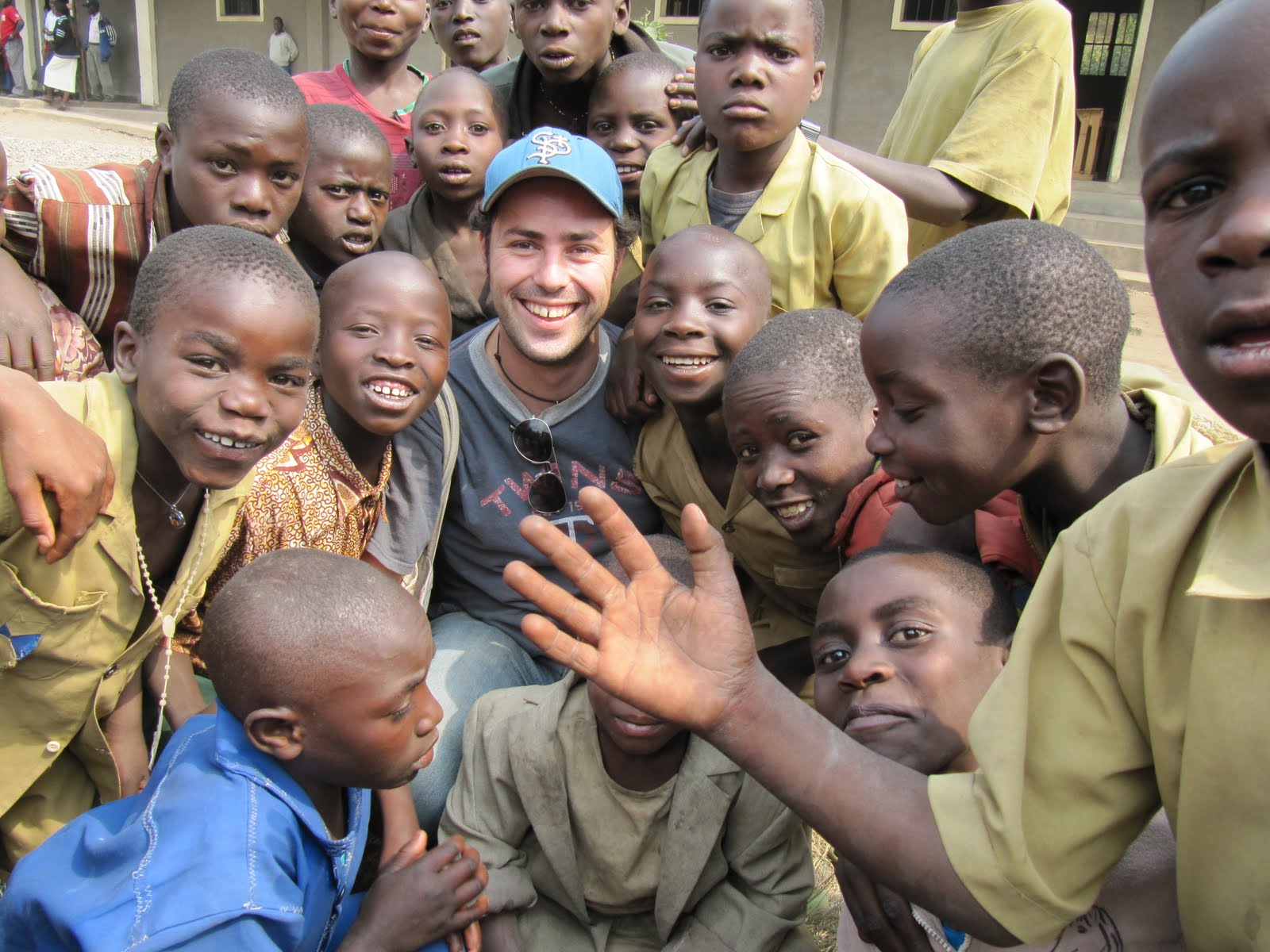
The children can't believe how white Muzungu Joss is.

The Fanta Arrives, just in time for fun day.

The children inform the audience of their rights.

We dance for the rights of the children.

Top Students are rewarded for their hard work.

Fanta and Rwandan donuts are enjoyed by all.

The children love the camera!

A satisfying week's work indeed. These are the days that you remember. These are the days that keep your spirit high. These are the days that remind you why. These are the days I feel privileged to experience.
Monday, September 13, 2010
More Fun Week Fun
 On the second morning we headed deeper into the surrounding mountains. This time it took us over an hour of inclines, bends and turns to reach the school. This school was at the top of the hill with a 360 degree view of the valleys all around. The children gathered upon the slope of the hillside and awaited the arrival of the Fun Week Team. As I rounded the corner of the audience their smiles lite up, seeming to say, “Today really is going to be a FUN DAY!” Just as the day before, the event began with the National Anthem and introductions of the leaders and guests.
  Shortly after, the fun beings. The children once again perform poems, dances and songs. All in honor of Children’s Rights and Fun Day. The third act (which can be seen in the video blog) is a traditional warrior dance, which is traditionally performed only by males, but today the girls are breaking down these centuries old barriers and perform alongside the boys. This creates an exciting buzz throughout the audience. The dancing is fantastic. The ground vibrates and the dusty earth rises in support of the children’s passion for a positive change in their community.
 Once the performances are over the children are each given a Fanta and Rwandan Donut. Such sticky excitement.
Today I have asked to interview a few members of the community about the day’s events. It may seem like such a simple thing, a day for the children to celebrate themselves, stand up for their rights and to be rewarded for their hard work, but this is an unfamiliar activity for the community.
Here are some excerpts from my interviews.

Each grade is given two awards; one is given to the overall top performer and another for the girl with the highest marks in sciences. Nizeyimana Marie Garth was the top female in science in the 6 grade at Sanza Primary school. “The books and pens will help me with my studies and the book bag will help me carry my things to school. But my favorite prize is the dictionary, because I want to become an English teacher! Thank you for the kindness and support you have given us.”
This is Damien’s second time attending Fun Day and his second time winning the top student prizes! Congratulations Damien! When Damien is at home he doesn’t have much time to study. He spends most of his free time doing chores around the house. Each day collects grass for the family cow, afterwards he walks 1 km to fetch water. How does Damien do so well in school? “I always study while I am at school and next year I will study even harder so that I will be the number one student in my class again.”
Mukamurara Beatrice, a 51 mother of 3 girls is a member of the Sanza Primary school PTA said, “Today was so special for all of the children. These school celebrations will motivate children to stay in school and work harder. It will also encourage children who have dropped out to return to school. It is wonderful to see all of the children in the community benefit from your sponsorship of our community.”
Such a simple day, truly changes lives.
I dedicate this post to 3 of my friend who have all lost a family member within the past week.
To Jessey, you have been a longtime friend of mine and supported me with my brother passed away. Thank you for your support then and you and your family are in my thoughts now.
To Hesron, I am very sorry for the loss of your 3 year-old niece. I only wish I could communicate this to you better.
To Crystal, safe travels to Canada. We will be here in Kigali when you return.
Sunday, August 29, 2010
Fun Week Fun
On Tuesday night I and 5 staff headed due East until we hit Lake Kivu. The journey was in the dark and like many roads in Rwanda they twisted and hugged the sides of the mountains. The road was built by Chinese contractors; in fact it seems the Chinese build all of the roads in Rwanda. The road to Kivu is particularly impressive as it has been cut into mountainside and hovers over steep valleys, but this isn’t something I would notice until our return journey to Kigali two days later. We arrived at our lakeside hotel in Kibuye just after 8 pm and settled in for the night.
 Ten hours later I awoke to the sound of waves hitting the shore line that was just beyond my window. I opened the patio door to discover the island dotted Lake Kivu. As my eyes adjusted to the rising sun I tried to envision the shores of the Democratic Republic of Congo that were just on the other side. But that is a development tale for another day perhaps, today was the first day of Fun Week.
 After a simple breakfast we headed 30 minutes into the mountains, which is a really short drive. As we arrived so did the children. A teacher and a whistle guided one of the schools down the mountain and announced their impending arrival. But to their astonishment a Muzungu was cheering on their arrival. Once they caught sight, the entire school stopped in their tracks. They slowly approached and gathered around saying nothing and only able to respond to, “How are you?” with “I am fine, teacher”.
It quickly became obvious that the chosen meeting location of the local government building was not a suitable place for 2,000 children. The solution was to send them to the “field” on top of the nearby mountain.
 It turned out the “field” was a pine forest, but this was a blessing as the day was spent in the shade rather than the equatorial sun. The event started with the signing of the National Anthem. It’s always a wonderful experience feeling the National pride of a country beaming through the voices of young children. Short introductions, including the Muzungu trying her best to speak the very few words of Kinyarwandan she knew, lead to the children’s performances.
 All of the songs and dances were written and choreographed by the children. The theme was fighting against child related violence and the promotion of children’s rights. Each school took their turn dancing, singing, reading poems and entertaining the crowd. Given the number of children at the event it was a bit of every child for themself and they slowly pushed in on the stage area, while other children took to the trees to get the best view in the house. I’m pretty sure if I would have climbed a tree at my school’s event I would have been very quickly escorted from the event.
 After the performances prizes were handed out to the top children in each class. One prize was for the overall top student, while the second was for the top performing female in the sciences. This is done to encourage female students not only to stay in school, but to work just as hard at classes that typically thought to be only for boys. The children were very proud to have won the prizes, but they really didn’t know how to react. There were so many people looking at them, they were given such nice things (new backpack, English dictionary, math set, notebooks and pens) and a Muzungu was asking them to smile for a photo! It’s a lot to deal with for sure.
 After all of the prizes were handed out it was time for the good stuff, Fanta and a Rwandan donut for all! The children were organized into their classes and made to wait for the arrival of their treat. As the tops were popped off their eyes were fixated on the fizzing sweetness just out of their reach. Fanta, Coke, Sprite and a few rogue Tonics were dispersed throughout forest. Their sticky smiles were quickly filled with baseball sized donuts.
As I wondered the forest I was greeted with curious eyes and eager handshakes. I’ve recently taken to the Obama style fist bump over the grubby handshake. Thankfully they love it and laugh when I complain they are too strong. We exchanged names, said hello, found out our age and then resorted to the camera for endless entrainment of taking photos and then showing them off.
 The day ended with a typical meal of bruchett (meat skewers) and chips (French fries). Contrary to my travel goals and practices I don’t have any photos of Rwandan food, but I intend on taking some photos and sharing the Rwandan cuisine with you all soon.
 Ten hours later I awoke to the sound of waves hitting the shore line that was just beyond my window. I opened the patio door to discover the island dotted Lake Kivu. As my eyes adjusted to the rising sun I tried to envision the shores of the Democratic Republic of Congo that were just on the other side. But that is a development tale for another day perhaps, today was the first day of Fun Week.
  After a simple breakfast we headed 30 minutes into the mountains, which is a really short drive. As we arrived so did the children. A teacher and a whistle guided one of the schools down the mountain and announced their impending arrival. But to their astonishment a Muzungu was cheering on their arrival. Once they caught sight, the entire school stopped in their tracks. They slowly approached and gathered around saying nothing and only able to respond to, “How are you?” with “I am fine, teacher”.
 It quickly became obvious that the chosen meeting location of the local government building was not a suitable place for 2,000 children. The solution was to send them to the “field” on top of the nearby mountain.
 It turned out the “field” was a pine forest, but this was a blessing as the day was spent in the shade rather than the equatorial sun. The event started with the signing of the National Anthem. It’s always a wonderful experience feeling the National pride of a country beaming through the voices of young children. Short introductions, including the Muzungu trying her best to speak the very few words of Kinyarwandan she knew, lead to the children’s performances.
  All of the songs and dances were written and choreographed by the children. The theme was fighting against child related violence and the promotion of children’s rights. Each school took their turn dancing, singing, reading poems and entertaining the crowd. Given the number of children at the event it was a bit of every child for themself and they slowly pushed in on the stage area, while other children took to the trees to get the best view in the house. I’m pretty sure if I would have climbed a tree at my school’s event I would have been very quickly escorted from the event.
  After the performances prizes were handed out to the top children in each class. One prize was for the overall top student, while the second was for the top performing female in the sciences. This is done to encourage female students not only to stay in school, but to work just as hard at classes that typically thought to be only for boys. The children were very proud to have won the prizes, but they really didn’t know how to react. There were so many people looking at them, they were given such nice things (new backpack, English dictionary, math set, notebooks and pens) and a Muzungu was asking them to smile for a photo! It’s a lot to deal with for sure.
  After all of the prizes were handed out it was time for the good stuff, Fanta and a Rwandan donut for all! The children were organized into their classes and made to wait for the arrival of their treat. As the tops were popped off their eyes were fixated on the fizzing sweetness just out of their reach. Fanta, Coke, Sprite and a few rogue Tonics were dispersed throughout forest. Their sticky smiles were quickly filled with baseball sized donuts.
 As I wondered the forest I was greeted with curious eyes and eager handshakes. I’ve recently taken to the Obama style fist bump over the grubby handshake. Thankfully they love it and laugh when I complain they are too strong. We exchanged names, said hello, found out our age and then resorted to the camera for endless entrainment of taking photos and then showing them off.
 The day ended with a typical meal of bruchett (meat skewers) and chips (French fries). Contrary to my travel goals and practices I don’t have any photos of Rwandan food, but I intend on taking some photos and sharing the Rwandan cuisine with you all soon.
Monday, August 23, 2010
Videos from fun week
Children dance and sing about Children's Rights and ending violence against children.
This dance is traditionally done by boys. Today girls join in on the fun.
I don't know how they dance with pots on their heads! They are great!
Saturday, August 14, 2010
The settling of dust

As I write this entry I am sitting in our gazebo in the front of our house in Kacyiru. We are incredibly fortunate to be living on a newly paved road as most homes are off a road that is off a dirt road that is off another dirt road. We are in the middle of the long dry season so many of these dirt roads have now become dust roads. Walking down any of these roads results in a dust cloud Pigpen would be jealous of. The dirt covers the lower half of your body, and somehow chemically binds to your ankles in a way that only a pumas stone and Listerine can remove it. We are told that the rainy season is coming, actually we have not been told that is coming but we have been give exact dates as to when it will be here. One source told us August 15th, another September 1st, and yet another September 15th. Each person makes their claim with great conviction. August 15th is less than 24 hours away and as it stands the skies are blue and partly cloudy, depending on the part you are looking at. Either way, once the rain starts it will be here for at least 2 months, with downpours expected twice daily, this is yet another reason we are incredibly fortunate to be living on a newly paved road. Those living on the dust roads are excited for the rains to come and wash off the 6 inches of dust, however given that all roads are on hills and they are already rutted and potholed I don’t see how a muddy, slick, rutted and potholed road is a better option. But then again, what do I know, I have only been in this country for 3 weeks. I’ll keep you posted on this one.
Kigali is very different than any place I have ever lived. Coming from Minnesota, Ha Noi, and southern Sweden the first thing that will hit you is the never ending hills. Each hill is basically its own suburb and each is connected by several windy and twisted roads. To get around town we usually hop on the local taxi buses. The system is simple, but you have to know how to use it and there are no written clues. So basically you need to know the neighborhood you want to go to and which stop it comes to. Standing on the curb you listen for the drivers to yell out Remera or Mumugi . Then you aggressively cue to get a one of the 15 spots on the bus. Once they are full they fly down the windy roads and you hope they are going the direction you need them to. As you approach your stop you knock on the roof to signal your stop. The average cost is 180 RWF or about $0.25. The average travel time from our doorstep to our destination is about 45 minutes, so just going into town takes a bit of planning and appreciation of cheap public transportation.
Kigali itself is a very chilled city, especially for its size of 1 million. The city is so separated by the hills that each suburb is mostly self-contained. The center or “town” takes less than 10 to circumnavigate by foot. The main taxi-bus stop is smaller than the bus park at my high school. Town is where head for treats such as vinegar (which I have yet broken down and paid the $4 for), potato chips, wine and western canned goods. Every purchase is scrutinized, do we really need it? How will we use it? If we buy it how much will our meal cost and how many meals can we get from it? Yes 95% of our treats are consumable.
 We have been slowing getting to know the expats in the community, but since our budget is as tight as a sausage casing we pick and choose our activities carefully. The top our list has so far been quiz nights, movie nights (at friends), cheapish dinners and picking up returnables from the nearby “Smarter” super market. Emily has put together a hiking group so we hope to organize some weekend outings soon!
 As for work nothing too exciting has happen in the past few weeks, but next week is “Fun Week”. I will be in the field for 4 days and fun is sure to happen! Details and photos to come! Whoop, Whoop
Subscribe to:
Posts (Atom)