Tuesday, January 11, 2011

Christmas in Kigali

Ah the Holidays. A time for being with friends and family and most importantly a time to take a break! The research has been going well, but the past 2 months have been a bit intense to say the least. It easy to underestimate the energy it takes to head into the field on a weekly basis and I am feeling a bit drained from the information overload.

So, thankfully Christmas came just in-time to give us a much needed break. Rwanda is a predominantly Christan with 90% of the population either Roman Catholic, Protestant, or Seventh-day Adventist (according to Wikipedia). Unlike most Western countries Rwanda's Christmas is focused on celebration rather then Santa and the practice of gift giving. Of course there were a limited amount of lights and plastic ornaments being sold in the markets, but they did not dominate the celebration.

As expats we channeled the familiarities of our homes and bought a few small gifts, picked out a tree and put up a few bobs and bits. Joss picked up our tree at a local green house. We hoped to buy a local variety, but unfortunately they are not popular enough to sell. We ended up with variegated rubber tree, much like the one my brother liked to eat as a child. The tree was decorated and a bird on a stick was our topper. Gifts were wrapped, piled around and the scene was set.

While most Rwandan's went to Church, Mid-night Mass and Christmas morning Mass, our house cozied up with a few candles, Christmas music, sugar cookies and nice glass of wine. On Christmas morning our resident Aussie grilled up some ham and pineapple (a Christmas tradition in his house).

To mark the occasion we used our oven for the 2nd time (the first was for a Thanksgiving apple pie). We bought a fat chicken at the local supermarket, which really is huge a treat. Chickens in Rwanda leave much to be desired. They have very little meat and what is there is tough and dark. No matter how it is cooked it tastes a smokey. Our chicken was juicy and lovely. The leftovers were made into a fantastic Minnesota wild rice soup (Don't know what that is? Your life is not complete. Come visit me in MN the next time I'm there.) The meal was rounded out with stuffing, roasted potatoes, green beans and a lovely salad topped with Wendy's pomegranate dressing (thanks Mom). So nice to take a break from it all and treat ourselves.

After dinner gifts were handed out and I found myself after 33 year still playing Santa. Our gift choices reflected our place in the world and things important to us, books, chocolate and small stuffed animals from the savanna (all except the animals are a real treat). It is such liberating feeling not to be bogged down by the over-consumerism of the Western Christmas. That said it was also wonderful to make Hesron's day by giving him a Manchester United jersey.

Wherever and however you spent it, I hope your Christmas was as lovely and perfect as ours.

Wednesday, November 24, 2010

Research Log 4 - More focus


Focus Groups
A second round of focus groups were held this week. Yesterday’s groups consisted of children between the ages of 12 – 15. The children were divided into Child-Headed Households (CHH) and children from Adult-Headed Household (AHH). Since we are using consent forms for all participants we had to locate guardians to sign for these children. The irony is that it was much more difficult to locate guardians for the children from AHH than for children from CHH. The Secretary of Social Affairs was able to sign for the children from AHH, but we had to locate a parent or guardian for the other children. We were told that the guardians would be available for the children and that in fact they were present. Emily took the adults into a separate room to go over and sign the consent from while a started to explain the purpose of the research and the child’s rights on an individual basis. The problems arose after explaining and obtaining an agreement to participate from the first child. I asked him if his parent or guardian was in the next room. At this point he indicated that he came alone. I showed him the consent from with his name on it and asked who the person was that signed the document. He said he had no idea who the person was. This happen a number of times and because we did not have parent/guardianship written consent for the children we did not allow them to participate. We suspect the Sector Leaders in charge of organizing the groups organized these random adults to sign for these children, however in an effort to retain face on their behalf we did not bring this issue up with them. Thankfully, we had enough children to participate in each group. Emily interviewed children from CHH while I interviewed children from AHH.

Overall I found the children more open and easier to get to participate than the adult focus groups. We played a few games at the start and in the middle of the group meeting. This seemed to help the children feel comfortable and open to the idea of the group. We also provided each child with a Fanta and a muffin at the start of the group meeting.

Since my group turned out to be 5 girls and 1 boy, the information I received was heave on the female perspective. The 1 boy did speak, but not a lot. However, the main purpose of the focus group was to get an overview of the topic and situation in Muko. We also intend to have semi-structured interviews after the household surveys have been completed. We will interview both boys and girls and this will help to create a gender balance research.

Household Surveys
Pilot Household Surveys were held today. As we suspected our surveys are too long and can take over 2 hours to complete depending on the number of people living in the home. After today’s test surveys will modify the survey as needed. We intend to return to the field next week with the modified surveys to complete the household surveys over 2 days.


During my 2nd interview a rain storm hit Muko. We had to stop the interview since the home we were in had a corrugated tin roof and the thundering sound forced us to take a break from the interview. In the darkness of the mud house I pulled out my camera to entertain the children that had been listening in on the interview and showing off by counting, saying the days of the week and reciting the alphabet all in English. They quickly hammed it up and posed all around the room. The photo shows the children in a dugout tree that was in the house. This is a photo on the streets of Muko shortly after the storm passed.

Wednesday, November 17, 2010

Research Log 3 - Defining Terms

Focus Groups
I held my first focus groups on Monday. With the assistance of the sector leaders 3 groups were scheduled and invited to participate. The groups were Cell Leaders, Primary and Secondary school Teachers and members of the Parent Teacher Association. The purpose of these purposefully selected focus groups was to gain an understanding of the perceived situation in Muko regarding child labor and education. Unfortunately (but unsurprising), the organization and scheduling of the groups was not as planned. Instead of having participants arrive at a designated hours throughout the day, all of the participants arrived at 9 am, which was the first time slot. I had no choice but to apologize to the participants and explain the misunderstanding.

Each focus group lasted between 1.5 and 2 hours. Despite knowing that Rwandans are reserved, we opted for focus groups (rather than semi-formal individual interviews) in order to gain a greater initial amount of data. As we are employing Grounded Theory, this data will be used to adjust our focus and related questions. The focus groups did not generate as much discussion and data as I had hoped, but they definitely opened the door to the understanding the perceptions held by the community leaders.

Defining Terms
The purpose of the focus groups in part was to define terms such as; at what age does a person become an adult, what is a Child-Headed Household, what is domestic (unpaid) labor, and what is agricultural (unpaid) labor. It was relativity easy to define the age of adult hood as well as what considered to be Child-Headed House. It was much more difficult to draw a line between agricultural work and domestic labor. It may prove difficult to differentiate between the two as our research continues as it is very easy for conversation to switch between the two. We will have to consider how to deal with this issue as we move forward.

Children Focus Groups
Hopefully before the end of this week or at the beginning of next week I (we if it is next week, Emily will return to Kigali this weekend) will return to Muko to conduct focus groups with children. As with the adult focus groups, these groups will not be for gaining in-depth information. They will serve as an introduction to the perceptions and realities that the children are facing. I have set aside more time to work with the children as it is important to make them feel comfortable as well as to make sure they understand the purpose of the research. I will also use games at various times of the discussion to keep them interested and active. This will also help create a higher level of comfort and interest.

At this point we have divided the children into children from Children-Headed Households and children from Adult-Headed Households. The ages of the children are to between 12 and 15. I have opted not to divide the children into male and female groups. If this proves to be hindrance on participation I will further divide the groups into male and female groups on any subsequent group discussions.
I am hopeful the children will be less guarded then the adults and more willing to openly talk. Given that the research subject is child-centric they may find the topics more interesting and worthwhile then the adults.

Semi-Structured Interview with Officials
While the Officials of Muko Sector have been supportive and have approved our research they have been a bit illusive when it comes to interviews. We may have to change tactics for gathering the information we hoped to gain from them.

Wednesday, November 10, 2010

Research Log 2 - A slowish start!


Here is week 2's Research Log. Not a lot has happen since last week, but underneath things are definitely progressing. I'm looking at it as the mega that is about to become the lava of my research.... Maybe I'm just trying to talk myself into all of this!

I hope you find it at least a little interesting. Time permitting I will write another blog non-research related. Also, once I get into the field my logs should be a bit more interesting!

Interview Delays
There have been a some delays in the commencement of interviews this week. I had hoped to get into the field and interview official and community leaders; however, due to coordination and transportation issues this has been delayed until early next week. This is a minor setback, which will have minimal impact on the research schedule. It will actually allow for more time to review the interview questions and structure.

Translators
I have worked closely with our translator this week. Emily and I created a detailed Translator Guide which clearly outlines the rolls of the Translators and Researchers in given situations. We have closely reviewed the research plan, purpose of the research as well as questions for the approaching semi-structured interviews. We have also carefully explained our expectations of them as research translators. This should help us avoid any unnecessary misunderstandings while in the field.

Semi-Structured Interviews
On Monday of next week semi-structured interviews will take place in Muko Sector. We have organized 4 small groups focus groups (2-4) people per group. The 4 groups are as follows, Group 1. Cell Leaders, Group 2. Head Masters and Teachers of Primary Schools, Group 3. Head Masters and Teachers of Secondary Schools, Group 4. Parent Teacher Association Leaders and Members.

The small groups will allow us as researchers to maintain more control of the process. This is preferred at this time as we are still testing out our translators and we are uncertain of their moderation skills. I am however worried that I may have scheduled too many groups for one day. I have estimated that these group meetings will take between 1.5 and 2 hours each. We are not looking for in-depth discussions at this time, but rather a general overview of the situation. Should we need to gather deeper information from these participants we should not have a problem contacting them again.

The goal of these initial interviews is to gain a perspective of the perceived problems/lack of problems and general attitudes related to child labor. We also are looking to define terms such as what is a child, what constitutes (child) agricultural labor, what constitutes (child) domestic labor. These questions will assist us with formulating impeding interviews with parents and children as well as the household surveys.

Participants will be supplied with refreshments. If the meeting were longer we would also supply them with cash (around $6) for their time and transportation. Additionally, since interviews will take place near their homes/place of work there should be no need for transportation reimbursement. However, as of now I am awaiting for conformation of the participants and the location exact of the interviews. I will have this information within a few hours of posting this blog.

While in the field it is my plan to schedule the next group of interviews. Hopefully we will be able to return to Muko later in the week (Thursday or Friday). Emily will return to Rwanda on Monday the 15th and will also participate in these interviews.

Working with Children
As a proportion of our interviews are to be conducted with children (including orphaned children) we must take ethical and legal concerns into consideration. We are in the process of tracking down the laws and procedures for gaining necessary permissions. In addition I will pose this issue to officials while in the field on Monday.

There has been some difficulty tracking down solid advice and methodology concerning child-centered methods, as most of what I have come across is more psychologically based. I will continue to investigate this issue.

Monday, November 1, 2010

Research Log 1


As expected the LUMID program has kept me very busy. I haven't spent much time on the computer that hasn't been work or school related. It also means that my endeavor to keep a blog is dwindling. In an effort to regain momentum I have decided to use my assignments as a jump off for my blog.

Over the next month and a half I will conduct research that will be used in my thesis. As part of research tasks I am required to create log entries regarding my progress. I'm not sure if this will be of interest to my readers, but it is what it is.

The Research Question

The research will look into child domestic labor within child headed households and adult headed households. We will be investigating the gender component and how this may or may not effect educational attainment. As we become more familiar with the situation we will narrow and modify our research question.

Joint Research
Emily and I intend to do our research as well as write our thesis together. However, we have had an early setback, Emily returned to Ireland late last week due to an illness in her family. We are hopeful that she will be able to return to Rwanda before the end of the month of November.

We will conduct this research while simultaneously conducting baseline data collection for a new project area of our host organization. This will allow us to spend more time in field as well as support our access to community we might otherwise have difficulty entering.

The First Visit
On October 25th we visited Muko Sector, where our research will take place, and met with local leaders including Executive Secretary, Secretary of Social Affairs, Police, Village and Cell Heads, Head of Forest Activities, Head Agronomist, Head of Security, and Head Masters of Schools. We were able to explain our research as well as data collection objectives. The community was very accepting of our intentions and welcomed us into their community.

We also had a short meeting with the Secretary of Social Affairs. She was very open and willing to provide us with any data available. We provided her with a list of preliminary data and she agreed to prepare the data before our next visit.

Translators
Since Emily and I speak a very small amount of Kinyarwandan we will primarily work through translation. We used a few translators for our project evaluation in September, however they did not work out as well as we had hoped. One of the girl’s confidence and English skills was not where we would have liked it to be and the second had a poor attitude and was a bit confrontational. Unfortunately this meant we had to find new translators to work with. After interviewing 5 additional possible translators we settled on 2. One of then accompanied us on our trip to Muko, we found him to be patient, easy to understand and even tempered.

Modifying the Research
Emily and I both understand the obstacles we must overcome, but we still intend to push forward with our joint research. Emily and I will remain in close contact as we revamp and adapt our research. We will be able to contact each via Skype periodically. I will keep Emily posted on the progress or lack of progress I am making in Rwanda. We intend to continue to work together on interview questions and surveys.

Emily and I have organized a gantt chart detailing our research schedule, which includes focus groups with children, semi-structured interviews with officials and leaders and conducting a number of household surveys. Given that Emily will no longer be here for most of November I am considering what is most important for our research topic and what is feasible for one person to manage. At this point it is my intention to schedule the semi-structured interview with officials and leaders for next week. This week I will be finalizing the questions for the semi-structured interviews. I will also spend a few hours with the translator reviewing the research purpose, interview questions, discussing expectations and familiarizing him with the research methodology.


So there you have it, my first research log ever! More to come over the next few weeks.

Wednesday, October 6, 2010

Fun Week Finish - Snapshot Blog

The final fun week entry brings us to Shingrio in the Northern Province. Joining us is Muzungu Joss.


The children arrive and the day begins!


Who is that strange looking kid in the back?


The children can't believe how white Muzungu Joss is.


The Fanta Arrives, just in time for fun day.


The children inform the audience of their rights.


We dance for the rights of the children.


Top Students are rewarded for their hard work.


Fanta and Rwandan donuts are enjoyed by all.


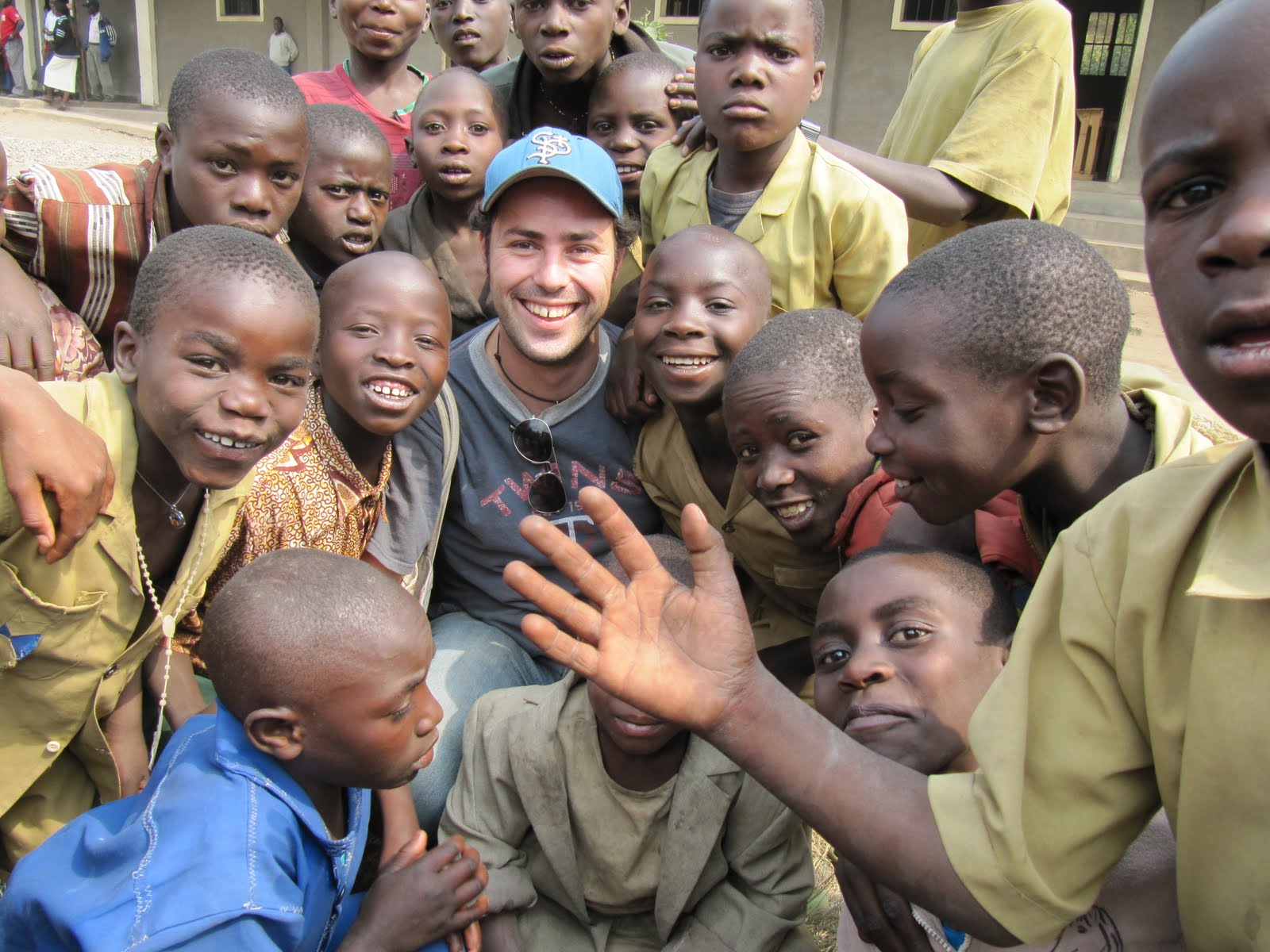
The children love the camera!


A satisfying week's work indeed. These are the days that you remember. These are the days that keep your spirit high. These are the days that remind you why. These are the days I feel privileged to experience.

Monday, September 13, 2010

More Fun Week Fun

On the second morning we headed deeper into the surrounding mountains. This time it took us over an hour of inclines, bends and turns to reach the school. This school was at the top of the hill with a 360 degree view of the valleys all around. The children gathered upon the slope of the hillside and awaited the arrival of the Fun Week Team. As I rounded the corner of the audience their smiles lite up, seeming to say, “Today really is going to be a FUN DAY!” Just as the day before, the event began with the National Anthem and introductions of the leaders and guests.

Shortly after, the fun beings. The children once again perform poems, dances and songs. All in honor of Children’s Rights and Fun Day. The third act (which can be seen in the video blog) is a traditional warrior dance, which is traditionally performed only by males, but today the girls are breaking down these centuries old barriers and perform alongside the boys. This creates an exciting buzz throughout the audience. The dancing is fantastic. The ground vibrates and the dusty earth rises in support of the children’s passion for a positive change in their community.

Once the performances are over the children are each given a Fanta and Rwandan Donut. Such sticky excitement.

Today I have asked to interview a few members of the community about the day’s events. It may seem like such a simple thing, a day for the children to celebrate themselves, stand up for their rights and to be rewarded for their hard work, but this is an unfamiliar activity for the community.

Here are some excerpts from my interviews.
Each grade is given two awards; one is given to the overall top performer and another for the girl with the highest marks in sciences. Nizeyimana Marie Garth was the top female in science in the 6 grade at Sanza Primary school. “The books and pens will help me with my studies and the book bag will help me carry my things to school. But my favorite prize is the dictionary, because I want to become an English teacher! Thank you for the kindness and support you have given us.”

This is Damien’s second time attending Fun Day and his second time winning the top student prizes! Congratulations Damien! When Damien is at home he doesn’t have much time to study. He spends most of his free time doing chores around the house. Each day collects grass for the family cow, afterwards he walks 1 km to fetch water. How does Damien do so well in school? “I always study while I am at school and next year I will study even harder so that I will be the number one student in my class again.”

Mukamurara Beatrice, a 51 mother of 3 girls is a member of the Sanza Primary school PTA said, “Today was so special for all of the children. These school celebrations will motivate children to stay in school and work harder. It will also encourage children who have dropped out to return to school. It is wonderful to see all of the children in the community benefit from your sponsorship of our community.”

Such a simple day, truly changes lives.

I dedicate this post to 3 of my friend who have all lost a family member within the past week.

To Jessey, you have been a longtime friend of mine and supported me with my brother passed away. Thank you for your support then and you and your family are in my thoughts now.

To Hesron, I am very sorry for the loss of your 3 year-old niece. I only wish I could communicate this to you better.

To Crystal, safe travels to Canada. We will be here in Kigali when you return.